By: Stephanie Ellison

A friend of mine has been suffering and my heart has been burdened to pray for them to see a reflection of how God sees them. I have been contemplating their suffering for a while. Honestly I am thankful for it because in their vulnerability to share it helps me see I am not alone. It makes me think of Jesus and I think my friend should hear this. You reflect Jesus. Yes you!
Jesus taught us how to suffer well. But I think sometimes we misunderstand what that means. Suffering well does not mean suffering silently. It does not mean pretending something doesn’t hurt, smiling through devastation, refusing to grieve, or believing that if our faith were stronger, we wouldn’t desperately want our circumstances to change.
In the Garden of Gethsemane, Jesus knew what was coming. He knew the betrayal, the rejection, the physical suffering, and ultimately, the cross. Yet He did not walk toward it pretending He wasn’t hurting. He told His disciples, “My soul is overwhelmed with sorrow to the point of death” (Matthew 26:38). I think there is something incredibly important about those words: Jesus named His suffering. He didn’t minimize it. He didn’t hide it. He didn’t pretend everything was okay simply because He trusted the Father.
Then Jesus prayed, “My Father, if it is possible, may this cup be taken from me. Yet not as I will, but as You will” (Matthew 26:39). Jesus actually asked the Father to take the suffering away. He knew the Father’s plan, and still He prayed, in essence, If there is another way, please take this from Me. He prayed it more than once.
That matters to me because His desire for relief wasn’t evidence of weak faith. His anguish wasn’t evidence that He didn’t trust God. His sorrow didn’t cancel His surrender. His surrender happened right in the middle of His anguish.
Sometimes we think suffering well means saying, “I’m fine.” But Jesus didn’t say He was fine. Sometimes we think trusting God means we shouldn’t ask Him to change our circumstances. But Jesus asked. Sometimes we believe surrender means we shouldn’t have a preference about what happens next. Yet Jesus clearly expressed His desire: Take this cup from Me. Then came the surrender: Yet not as I will, but as You will.
I think that order is beautiful. Jesus didn’t skip over His humanity to get to surrender. He brought His anguish, His desire, His sorrow, and His suffering honestly before His Father, and then He entrusted the outcome to Him.
Maybe suffering well sounds less like, “God, this doesn’t hurt because I trust You,” and more like, “God, this hurts more than I know how to explain. I don’t want this. Please change it. Please take this cup from me. But if You don’t, help me trust You here.” That is not weak faith. That is the kind of faith Jesus demonstrated.
Sometimes a dangerous idea sneaks into our understanding of faith: that if we really trust God, somehow we should be less affected by suffering. But Scripture doesn’t give us a Savior who was emotionally detached from pain. We see Jesus weep. We see Him grieve. We see Him experience anguish. We see Him ask His friends to stay near Him. We see Him pray desperately to His Father. Ultimately, we see Him surrender.
Jesus didn’t teach us that faith makes suffering painless. He showed us what faithfulness can look like while we are in pain.
That distinction matters because some seasons simply hurt. Some prayers seem to go unanswered. Some circumstances desperately need to change. Some losses leave us wondering how we are supposed to keep putting one foot in front of the other. In those moments, perhaps our goal isn’t to become so “faithful” that we stop feeling the weight of the cup. Maybe our invitation is to become faithful enough to bring the cup even the cracked ones to God. Maybe he can repurpose the cup to hold flowers instead of tears.
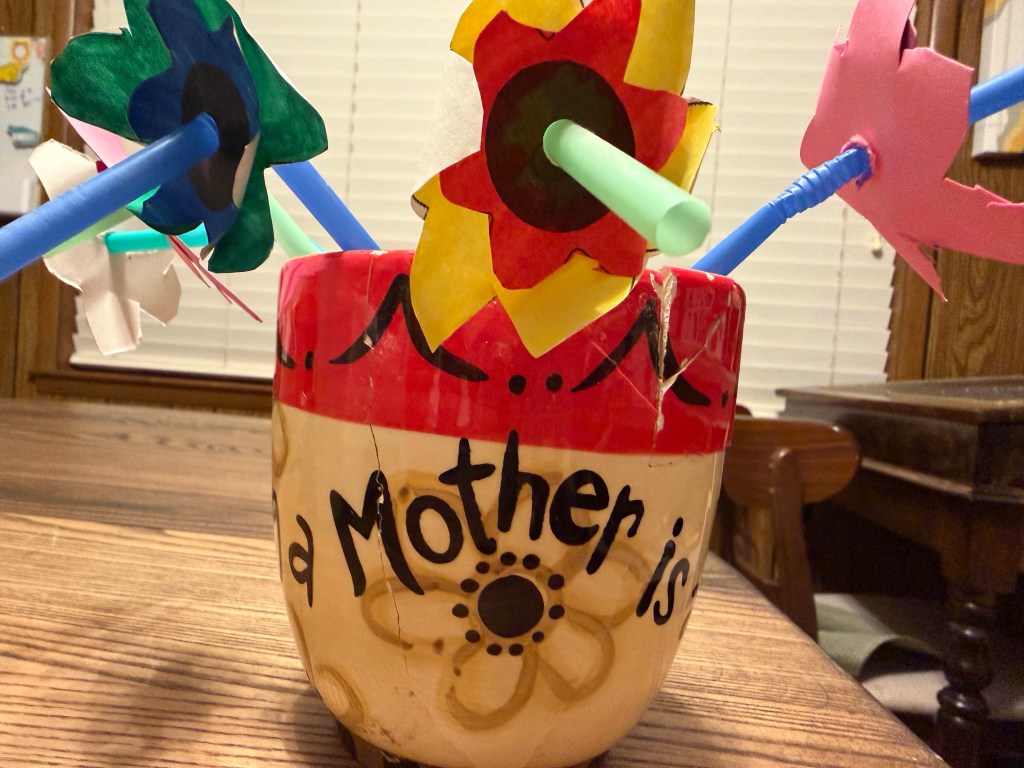
There may be a cup in your life right now that you desperately want God to remove. It may be cracked and no longer able to sustain you, it may be leaking all of your tears. Ask Him. There may be something breaking your heart. Tell Him. There may be circumstances you desperately want Him to change. Pray for them to change. God is not frightened by our honesty, and surrender does not mean we stop asking for the miracle.
We can pray for healing and trust God. We can ask for restoration and surrender. We can desperately want our circumstances to change and remain faithful when they haven’t changed yet. We can grieve and believe. We can hurt and hope. We can ask God to take the cup and still trust Him when the cup remains broken in our hands and still catching our tears.
Eventually, Jesus stood up from that garden and walked toward what the Father had called Him to do. But He didn’t get there by denying His suffering. He got there through prayer, honesty, dependence, and surrender. Perhaps that is one of the greatest lessons Gethsemane gives us.
Suffering well isn’t pretending the cup isn’t heavy. It is bringing the weight of it to the Father again and again. It is having enough relationship with God to say, “I don’t want this.” Enough faith to ask, “Would You please take it?” Enough trust to eventually say, “But if this cup remains, I still choose You.”
Jesus didn’t simply tell us how to suffer well. He went first.
To my friend…you are not alone in your suffering.
💕-Stephanie Ellison


Leave a Reply